Exploring the ULIS planet
do•doc as an experimental video tool.
A week-long workshop run with Sarah Brown and Désert Numérique at the Collège Armorin in Crest (Drôme, France) with a ULIS class (Unités Localisées pour l’Inclusion Scolaire, inclusive education units). The ULIS scheme allows a small group of pupils with specific needs (language and learning disorders, autism, motor disorders, etc.) to attend primary and secondary school. During the week, the pupils become explorers of a newly discovered planet — a pretext for discovering different video techniques and making a video logbook of this exploration.
On the first day, we introduce the project to the pupils: We are explorers setting off to discover an unknown planet
We suggest they make a video travel journal of this exploration. We discuss the idea of a travel journal and of scientific exploration. Together, we try to describe the planet we are going to explore and draw up its identity card. The class teachers prepared the ground by showing the pupils some scientific travel journals. A few useful notions, such as filming and sound effects, had already been covered and are displayed in the classroom.
One of the constraints of their production will be the technique used. We make 4 video techniques available to them:
Stop-motion
Shadow puppetry
The video microscope
Video effects
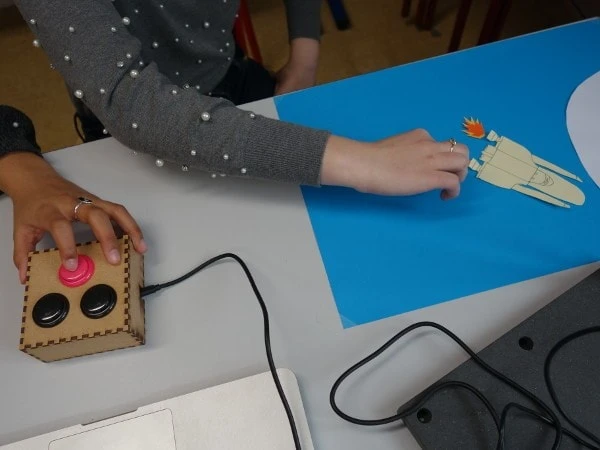
The pupils are invited to form pairs and come and try out these different techniques. For video effects, they handle various objects in front of a camera: a tube wrapped in tinfoil, gelatin, light, a kaleidoscope and a coloured LED strip. They also have a small camera with a glitchy video feed. Another workshop introduces frame-by-frame animation: using do.doc, the pupils animate the rocket taking off. In another room, pupils cut strange animals out of black paper to film them as shadow puppets. Meanwhile, two other pupils use the microscope camera to discover the details of pieces of wood, pine cones, erasers and other found objects. These workshops have no other purpose than understanding and experimenting with these techniques.
After these short workshops, we asked the pupils which technique they liked best. A few working groups formed this way, while some pupils wished to work alone. Each group has to go and explore an area of the planet and make a short film.
We hand out a story sheet for each group to fill in. The pupils have to describe their area and give it a name. We also ask them to imagine a scientific discovery they might make in their area and to bring back a sample of it. As an extra constraint, they have to shoot their film from a first-person point of view, like a video travel journal.
Download the story sheet here (in French)
It is early afternoon, and we suggest the pupils record a sound effect all together for the rocket landing. In chorus, they produce a kind of rumble, then a sound of wonder (waaaaaah) for the discovery of the planet.
Once their story is settled, we move on to the storyboard.
We explain how a storyboard works and draw an example on the board. We then hand each group sheets with empty frames. Each film must have 3 moments: discovering the landscape, discovering the discovery, and a conclusion.
Download the storyboard sheet here (in French)
On the second day, the pupils start building the sets from the storyboards drawn the day before. Drawings, cut-outs and collages with coloured paper, black paper cut-outs glued onto wooden sticks, a 3D set for a microscope film… We suggest they build the sets little by little and start filming as soon as the set for one scene is finished. In groups, the pupils take up one or more of the chosen techniques to shoot their first sequences. Bit by bit, the sets are built and the scenes are shot.
At the same time, we suggest they film an introduction to their film using the glitchy camera. They have to say a short sentence naming the area they are about to explore: We are off to explore the desert zone, let’s go!
On the third day, the pupils finish their sets and shoot the missing sequences.
Those who finish early make posters inviting people to the presentation the next day; others document the workshop and take a few photos with the tablets. Some even have time to start laying out these photos in do.doc.
To stay with the video travel journal theme, we ask the pupils to write a voice-over to go with the sequences of their film. The stories become sharper and more and more coherent. After some speaking practice, we invite them one by one to record their voice-over in the room next door. We have prepared background sounds matching their sets, which we play during the recordings. We try to have them perform their voice-overs while their video plays, but some pupils’ dyslexia makes the process a little harder. We had not realized how difficult this exercise would be for them.
We still need to make the end credits. Each pupil draws themselves and writes their first name on a coloured rectangle. They are then invited to the animation station to move their character and get it into the rocket before take-off.
On the fourth day, we watch all the films. One small detail is still missing: we ask the pupils to write the name of their area on a piece of coloured paper and photograph it. This element will then be placed in the top left corner of their video, thanks to a new do.doc feature. We then prepare the 3 pm presentation. The film made up of the different shorts will be screened for other pupils, teachers and supervisors. Tables, set up like an exhibition, will show how the films were made. On this last morning, the pupils finish preparing the exhibition: colouring in the storyboards, preparing items to display, printing making-of photos…
Then we go down to the school library to set up the room for the presentation. We take the opportunity to watch the whole film together. The pupils are proud but nervous about presenting their work in front of other people; they are afraid of being laughed at. They hide when their film comes on screen.
At last it is time for the presentation, and the room is full, mostly with other pupils. The film is screened, then everyone takes their place behind their exhibition table to explain how their film was made. The other pupils are very interested and happily try out the techniques on show. Joy and pride light up the pupils’ faces.
DÉSERT NUMÉRIQUE presents: Exploration de la planète des ULIS
A video made as part of the project Aventures dans des mondes inconnus (Adventures in unknown worlds)
With the artists: Sarah Brown, Sarah Garcin and Louis Eveillard
The explorers: Brandon, Laurence, Léa and Léa, Léo, Lindsay, Mattéo, Mélynda and Quentin
Nina Le Guernevé and Laurent Ginoux
And Karen Dermineur.
Aventures dans des mondes inconnus is an arts and cultural education project run by the association Désert Numérique in 2020 for the pupils of the ULIS unit at the Collège F.J. Armorin in Crest (Drôme), supported by the Fondation de France, the DRAC Auvergne-Rhône-Alpes and the Cité scolaire F. J. Armorin.
DÉSERT NUMÉRIQUE thanks all the pupils, the artists, the teaching and technical staff, the partners, and everyone who joined us on this new adventure.
Photo credits: Karen Dermineur
Désert Numérique website
Sarah Brown’s website
USB microscope camera
More from In practice
-
Feuille de choux
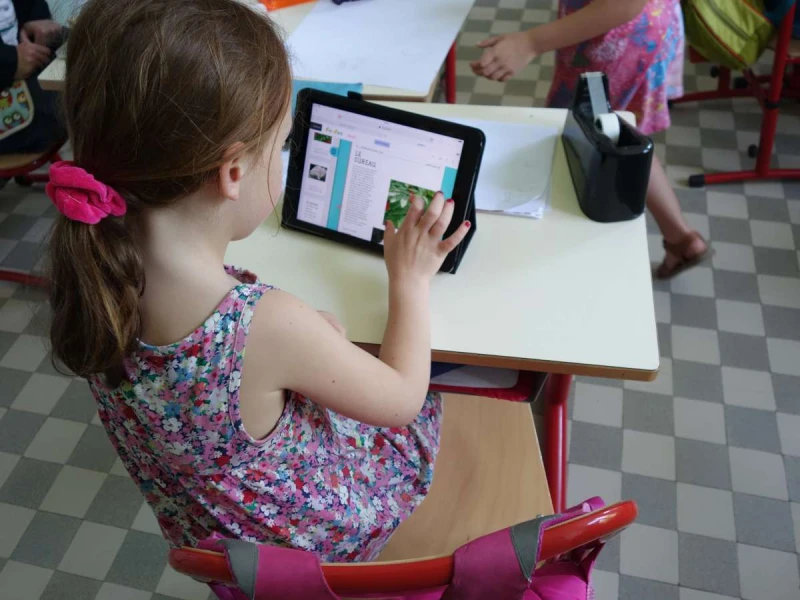
do•doc as a layout tool for writing and making a collaborative newspaper.
A series of three week-long workshops with different primary school classes in the Drôme (France). The theme: making a newspaper from A to Z with do•doc, in which pupils talk to us about the environment.
These workshops were run with the association Désert Numérique and video artist Sarah Brown.
-
La petite lucarne
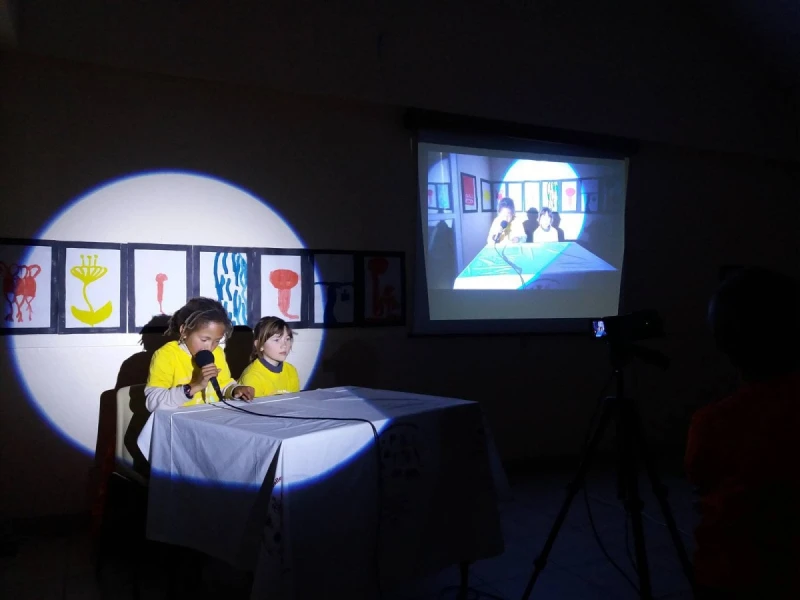
do•doc as an editing tool for writing and making videos.
A series of three week-long workshops held in the Drôme (France), in the single-class schools of Cobonne and Saint-Nazaire, between April and June 2019. In these workshops, pupils produced a TV show from A to Z. Each workshop starts with an editorial meeting that decides which reports to film, and ends with a live show in front of the villagers, produced entirely by the children.
Workshops run with the association Désert Numérique and video artist Sarah Brown.
-
Exploring the ULIS planet
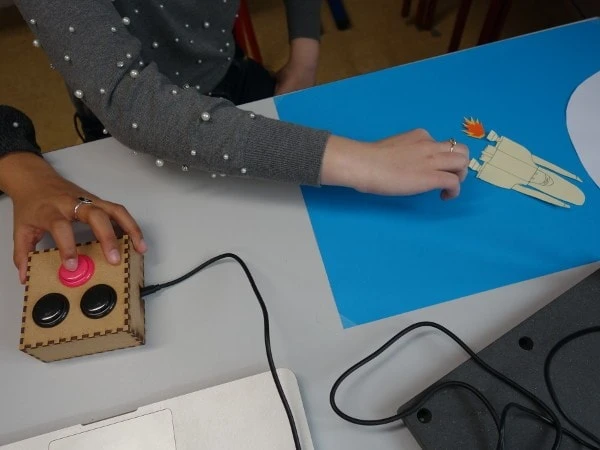
do•doc as an experimental video tool.
A week-long workshop run with Sarah Brown and Désert Numérique at the Collège Armorin in Crest (Drôme, France) with a ULIS class (Unités Localisées pour l’Inclusion Scolaire, inclusive education units). The ULIS scheme allows a small group of pupils with specific needs (language and learning disorders, autism, motor disorders, etc.) to attend primary and secondary school. During the week, the pupils become explorers of a newly discovered planet — a pretext for discovering different video techniques and making a video logbook of this exploration.